

Housing costs
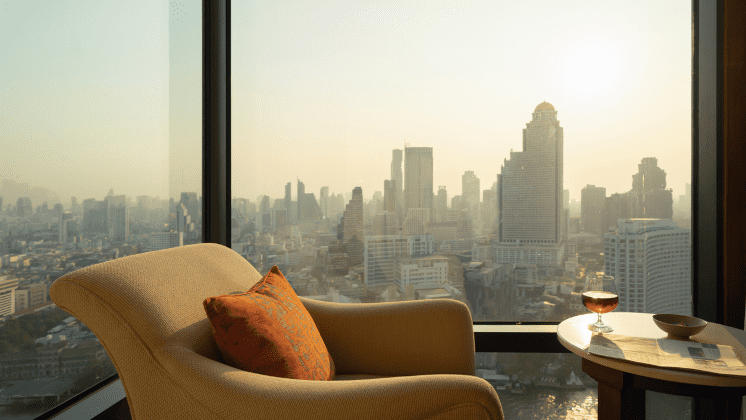
Your housing cost in Thailand is likely to range from 15,000 THB to 60,000 THB+ ($446 to $1,785) per month.
Here are a few examples:
- Mid-range 1BR condo: 15,000–20,000 THB
- High-end 2BR condo: 40,000–60,000 THB
- Ultimate luxury: 75,000 THB+
At the lower end of the scale, expect to get a mid-range, one-bedroom condo. In newer buildings.
If you’re looking for housing that meets or exceeds Western standards, focus on higher-end condos. These often combine the best of both worlds — space and luxurious amenities. In this price band, you’ll usually benefit from helpful front-desk staff, a modern hotel-style lobby area, a well-kept outdoor pool, well equipped fitness center, private grounds, and conveniences close to the BTS skytrain and/or other attractive locations.
Moving to Thailand to take full advantage of luxury living at a lower cost? Accommodation upwards of THB 75,000 will deliver. Compared to many other retirement destinations around the world, Thailand delivers a lot of luxury for relative to the cost. On top of hotel-style amenities and concierge staff, this type of housing offers expansive rooms, often with stunning views, world-class materials and appliances. It also often comes with added bonuses like coworking spaces and rooftop lounges.
Besides amenities and floor space, various elements impact housing costs in Thailand. Location is a key factor. Living in the capital, Bangkok, comes with higher housing costs — particularly for central accommodation or those with easy access to transport links such as the BTS skytrain or MRT subway. If you want this convenience, expect to compromise on space, amenities, or price.
Outside of Bangkok, you can find a small or mid-sized apartment near a beach for 15,000 THB, but Western-standard buildings with a great location can easily jump to the 40,000–60,000 THB range. In cities like Chiang Mai, prices are about 20% lower, and significantly cheaper if you’re willing to live an hour or more away from the central part of major cities.
For a better idea of accommodation types and housing costs in Thailand, real estate aggregator sites like Hipflat, DDProperty, and Thailand-Property.com are useful resources. They show locations, floorplans, building details, and the rental and purchase prices of many properties.
If you plan to fully retire in Thailand, consider buying a condo. Expect to pay 3–10 million THB ($90,000–300,000) for the three levels of apartment described above. You can, of course, pay much more, with several global chains of branded residences (Four Seasons, Ritz-Carlton, Mandarin Oriental, Banyan Tree, Conrad, etc.) offering units in the millions of dollars. Note that although foreigners are not permitted to purchase land in Thailand, they can own designated condos in development projects, and can rent houses or villas under long term leases with a term up to 30 years.
Utilities costs
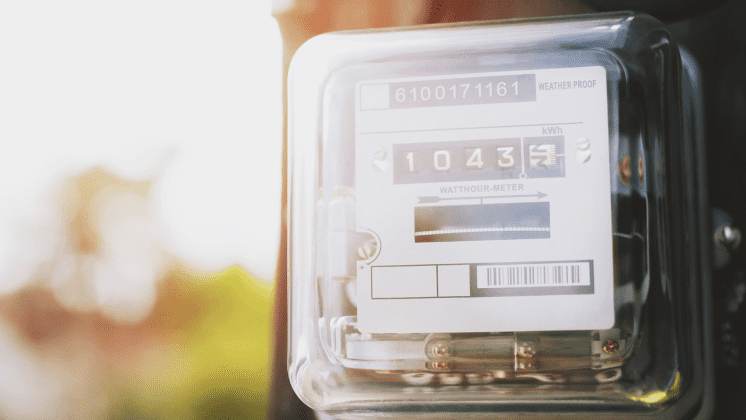
When people talk about the cost to retire in Thailand, they seldom factor in utility costs. Depending on the size of your property and your air conditioning usage, expect to pay between 3,000 THB and 5,000 THB per month for utilities. This cost is made up of various elements.
Wi-Fi usually costs between 400 THB and 800 THB. High-speed internet is inexpensive and available throughout the country from multiple providers. In many condos, you will be expected to set up your own Wi-Fi, which comes with installation costs. Always check Wi-Fi speed and availability before signing a lease.
Electricity costs can be highly variable and likely to set you back between 1,000 THB and 5,000 THB. Your A/C use will be the biggest factor. In some condos you will have to pay your bills directly yourself, while in others, it will be added to your monthly rental bill. Be wary that, although technically illegal, some older properties charge above the government rate for electricity. It is advisable to check this before signing your contract.
Water typically costs between 300 THB and 600 THB per month. Some condos have fixed monthly water rates, like 500 THB no matter your usage, while houses and apartments are typically metered and the cost depends on your usage. It is not recommended to drink water from the tap, but some condos provide a communal filtered water dispenser for a small fee. Alternatively, there are popular bottled water delivery services available at relatively modest cost.
Mobile phone and data packages are high quality and good value in Thailand. It is possible to find contracts with unlimited data for between 200 THB and 600 THB. Coverage is generally excellent.
Food costs
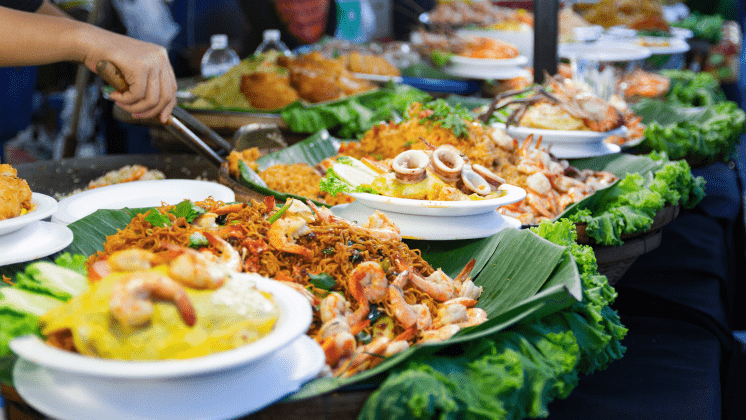
The cost of food in Thailand depends heavily on your willingness to adapt. While good-quality local food is far cheaper than Thai food in your home country, imported food is typically much more expensive than in its origin country. For this reason, food costs can range between 6,000 THB and 20,000 THB+ per month.
Dining out in Thailand runs the gamut, especially in Bangkok, other major cities and beach resorts. A street food meal from a vendor’s cart or a food court costs as little as 30–60 THB. A meal in a mid-level restaurant typically ranges from 80–300 THB. Dining in a luxury restaurant will set you back upwards of 1000 THB+. International hotel restaurants will cost international-standard prices. Bangkok is also home to Michelin-starred restaurants and omakase counters that charge as much as THB3,000–12,000 per head for the tasting menus.
If you eat foreign food frequently and don’t adjust to the local cuisine, you’re likely to burn through your budget more quickly. The good news is, Thai food is among the best — the freshest, tastiest and healthiest — in the world! Once you have settled in, you can also find local alternatives, like good coffee for one-third of the price of international chains.
Shopping at local,open air markets that sell fresh ingredients will offer much lower prices than Western-style supermarket chains. Those stores,such as Villa Market or Tops, are geared more toward middle-upper class and expat shoppers looking for familiar imported food.. You will often find that it’s cheaper to eat out or order delivery than buy Starbucks at a Western-style grocery shop.
When choosing your accommodations, it is worth factoring in local food options. If you hope to save costs by eating local, move somewhere close to a food market, food court, or street food vendors. These are not always easy to find in the built-up city center. If, on the other hand, you can’t live without international cuisine, it is best to live closer to the city center where you will have access to a range of international restaurants and the full spectrum of food delivery services.
Prepared-food delivery apps like Line Man or GrabFood are very efficient and the delivery costs are very low — as little as 10 THB per order. Grocery delivery from vendors like Lotus’s (formerly Tesco Lotus) and Happy Fresh is also easy, efficient, and cheap. In larger cities, meal plan delivery services are also available.
Cost of alcohol

How much you budget for alcohol will obviously depend on how much you drink; be prepared to set aside anything from 0 THB to 10,000 THB per month. As with food, local alcohol is inexpensive, with beer costing between 60 THB and 80 THB per liter and local rum and whiskey costing between 280 THB and 450 THB per 700-mL bottle. Imported alcohol is significantly more expensive due to heavy import duties and tax, which add up to as much as 400%, often resulting in costs far higher than those in your home country.
Imported beer usually costs between 80 THB and 300 THB per liter, while imported wine starts around 750 THB per bottle and rises rapidly. Imported liquor often costs 1,000 THB+ per 700-mL bottle, and you can easily pay several times this for trendy whiskeys or cognac. This turns into a significant factor in the cost to retire in Thailand if fine alcohol is a big part of your lifestyle.
Transportation costs

When calculating the cost to retire in Thailand, transportation may or may not be a significant factor. If you plan to rent a condo by the beach and spend your days strolling barefoot between the pool and the ocean, you won’t need to budget much for transport at all.
If you live in the city, motorbike taxis (15–100 THB), taxis (60–200 THB per journey), Grab (100-3,000 THB per journey) and public transport (15–160 THB per journey) are likely to be your main modes of getting around. For those brave enough to hit the road, car rentals (700–3,000 THB/day) are readily available for occasional trips, while long-distance taxis are incredibly affordable (from around 1,500 THB for a 2.5-hour journey).
If you live far outside the cities, you will likely want to purchase a car or motorbike. Like food and alcohol, imported cars — especially luxury cars — are subject to very high import taxes in Thailand. On the other hand, Thailand has a large domestic automotive manufacturing sector (Toyota, Honda, etc.) and these made-in-Thailand cars can be both high quality and inexpensive. For a modest domestic vehicle, expect to pay between 30,000 THB and 500,000 THB for used and between 1 million THB and 3-million new. Compulsory car insurance costs around 650 THB per year, while private insurance with extra coverage costs anywhere from 1,500 THB to 30,000 THB per year (10,000 THB to 25,000 THB average). The money-conscious and brave can opt to buy a scooter or motorbike, which may cost between 15,000 THB and 20,000 THB used or 40,000 THB+ new.
For those who plan to travel while in Thailand, domestic and regional flights are very inexpensive. Domestic Thai destinations start as low as 500 THB when booked in advance, or 2,000–4,000 THB on average. A final factor to consider is flights back to your home country to visit friends or family. The good news is that BKK is a global transportation hub, meaning a lot of options and a lot of price competition. Flights to North America and Europe tend to be plentiful so you can shop around and avoid traveling during peak seasons.
Healthcare costs

Thailand has well-developed public clinics and hospital systems with very low prices and good quality. Thailand also offers world class private hospitals that have become a global medical-tourism mecca, with best in class technologies, modern facilities, and services at somewhat higher, though still quite reasonable rates. This is a major draw for many looking to retire in Thailand, as it offers peace of mind that health issues will not necessitate a return home.
Health insurance is not only prudent, it may be mandatory for some foreigners who (for example) apply, for the ten year LTR visa, which requires at least $50,000 in coverage. Comprehensive insurance typically costs $1,500–4,000USD per year.
Other healthcare costs in Thailand to consider include annual checkups, which cost around 4,000 THB+ at major private hospitals, and life insurance.
To get a more accurate estimate of your insurance costs, get an quote from our preferred insurance broker Seek2Insuree here: Expat Health Insurance Experts | Baan Thai – Immigration Lawyer Thailand
Entertainment costs

The cost of living in Thailand is largely dictated by lifestyle. Luxury entertainment facilities like malls, cinemas, and spas are readily available across the country and often cost far less than in the West. Massage costs as little as 250–300 THB per hour or 1,000 THB+ in a luxury hotel. There are huge, luxurious, and modern movie theaters that play all the latest blockbusters, with tickets from 70 THB to 280 THB.
Live music is extremely popular, and can be found in many free-entry bars nightly. Towns and cities frequently host free live music events like Bangkok’s Symphony in the Park and Pattaya’s International Music Festival. You’ll also discover a full calendar of free religious, cultural, and entertainment events, from Songkran (the Thai New Year water festival) to Loy Krathong to the Vegetarian Festival to the Pattaya Fireworks Festival. Thailand’s huge and diverse expat community hosts lots of “meetup.com” type clubs and social events for any interest, basically for free.
In addition, the extremely well-developed tourism infrastructure in Thailand means endless opportunities for economical day trips, overnight trips, and tours.